Anglosphere
A Western-led sphere of influence among five core English-speaking nations.

Nagihuin · CC BY-SA 4.0
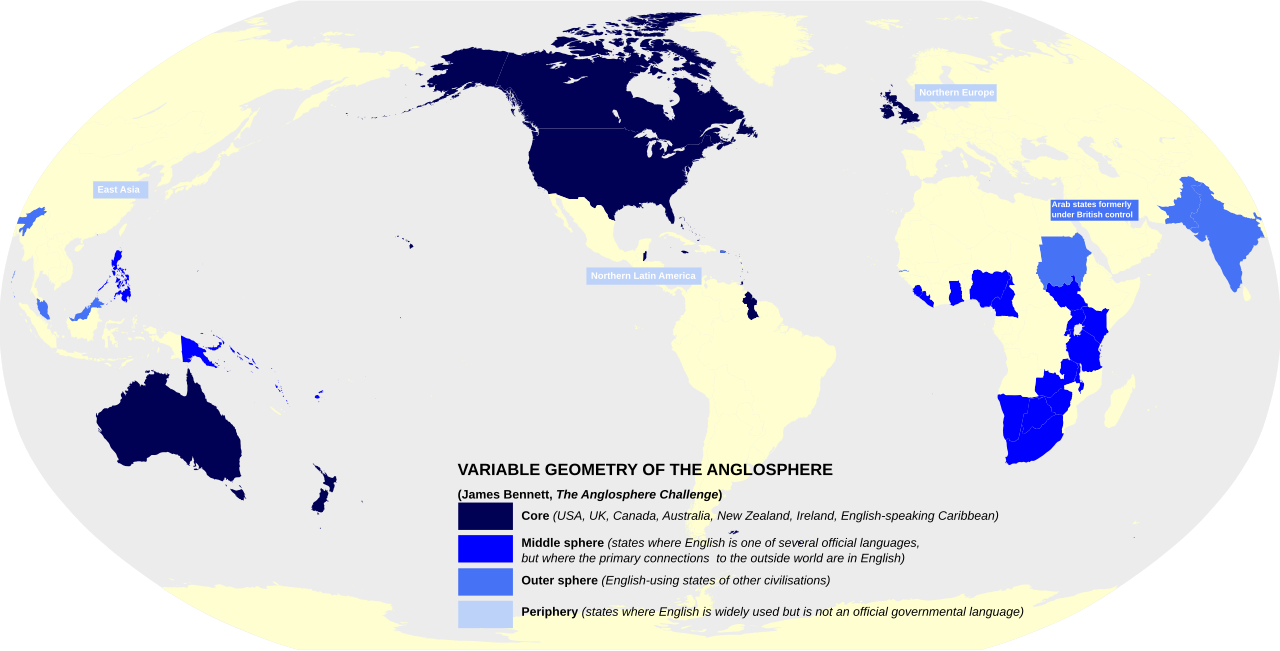
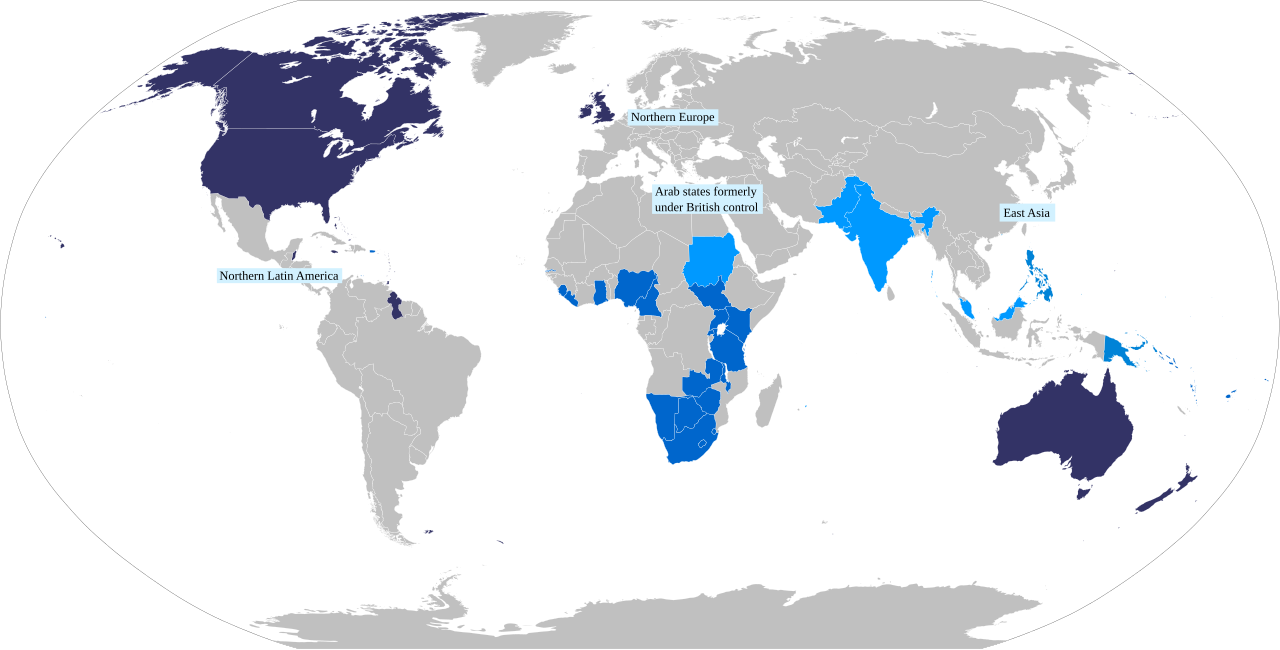
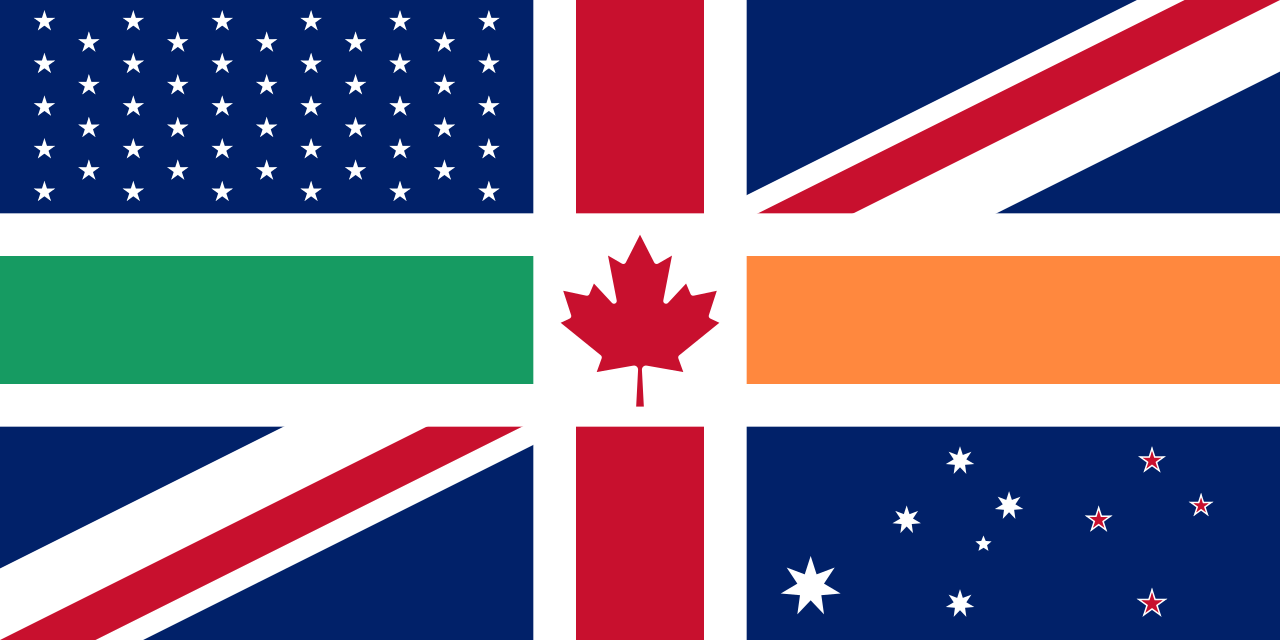
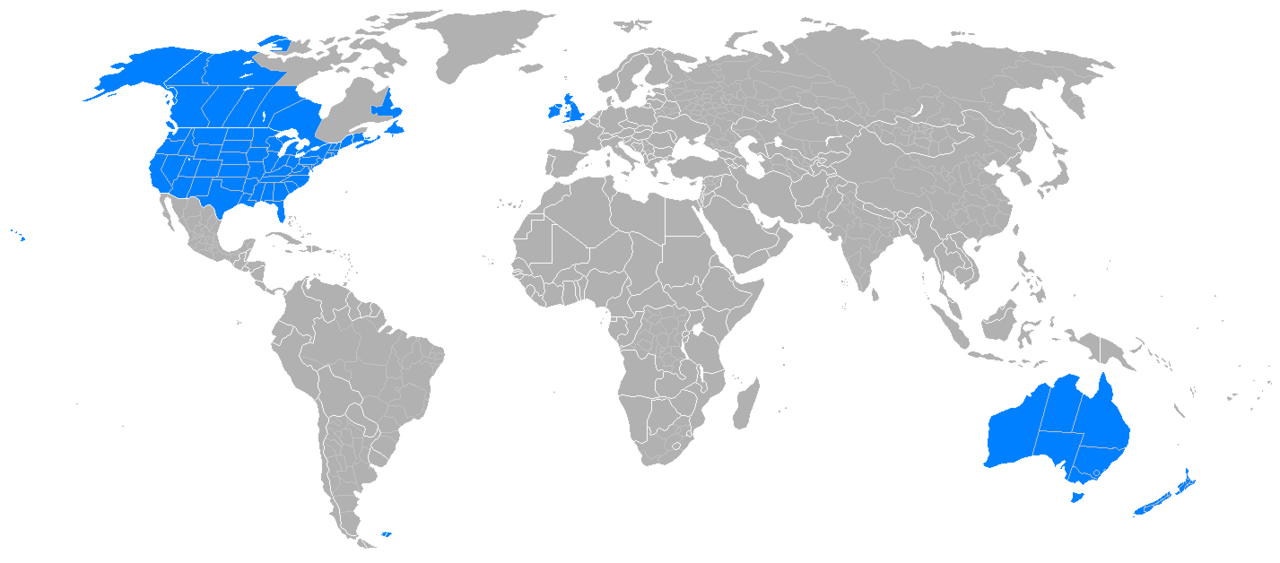
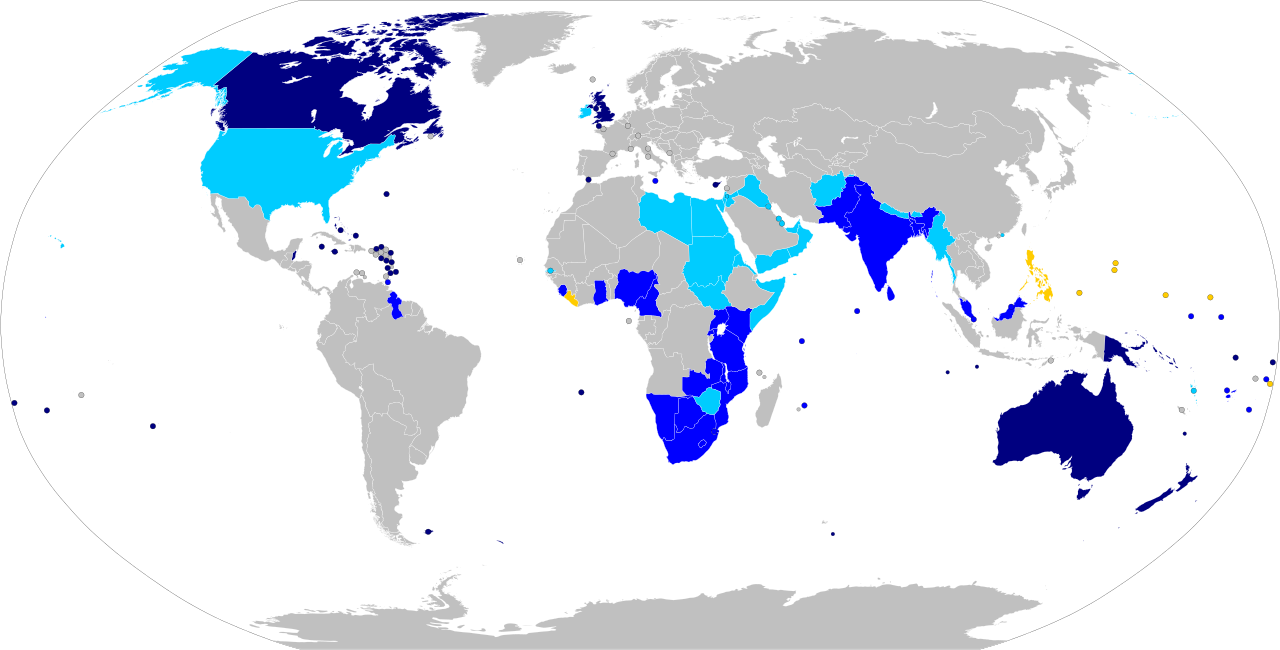
The Anglosphere is a Western-led sphere of influence among English-speaking countries with strong political, economic, cultural, and military ties. The core group comprises five developed countries that maintain a close alliance: Australia, Canada, New Zealand, the United Kingdom, and the United States. Although extended definitions include non-Western and developing countries once part of the British Empire that retained English influence and common law, the Anglosphere is a distinct grouping not synonymous with all countries where English has official status.
- Core countries
- Australia, Canada, New Zealand, United Kingdom, United States
- Shared head of state (four core)
- King Charles III
- Key military alliance
- Five Eyes
- Economic model
- Anglo-Saxon economic model
- Legal tradition
- Common law
- Political system (four core)
- Westminster parliamentary system
- Political system (United States)
- Presidential republic
Lore & Background
James C. Bennett later defined the Anglosphere as 'the English-speaking Common Law-based nations of the world,' arguing that former British colonies retaining English common law and language have done significantly better than counterparts colonised by other European powers. Merriam-Webster defines the Anglosphere as 'the countries of the world in which the English language and cultural values predominate.'
Reader's Guide
The Anglosphere concept is significant for describing a network of developed English-speaking nations that maintain close cultural, diplomatic, and security links. Proponents, often from the political right, argue that shared common law traditions and language foster unique prosperity and cooperation. The core Anglosphere countries collaborate extensively through military and security programmes such as Five Eyes, AUKUS, and the UKUSA Agreement. Critics, including Michael Ignatieff, contend that the term neglects fundamental legal and cultural differences between the US and the UK, and that UK and European norms drew closer together during Britain's EU membership. Others have criticized the concept as a romantic illusion or a replacement for 'the white Commonwealth.' The term remains contested, with its boundaries imprecise and its inclusion of countries like Ireland and the Commonwealth Caribbean frequently omitted despite their English language and common law traditions.
Did You Know?
- The five core Anglosphere countries are aligned under the Five Eyes intelligence alliance.
- Four of the five core countries have King Charles III as head of state and use the Westminster parliamentary system.
- Proponents of the Anglosphere concept typically come from the political right, while critics often come from the centre-left.
Gallery
More in Regions & Cultural Spheres 1-24
Elsewhere in the Regions & Cultural Spheres universe
Spotted an error? Know more?
This is a living reference — every entry is fact-audited, and reader corrections feed straight into our audit queue. Suggest an edit · See this site's audit record