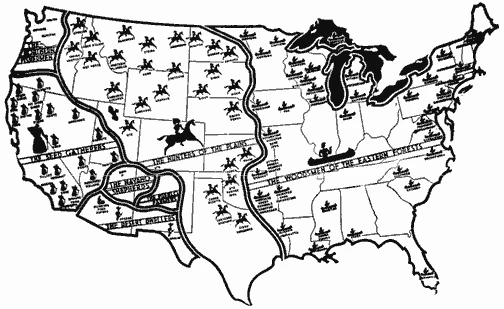
Historical region
Geographical regions defined by past cultural or political significance.

Yamen · CC BY-SA 4.0
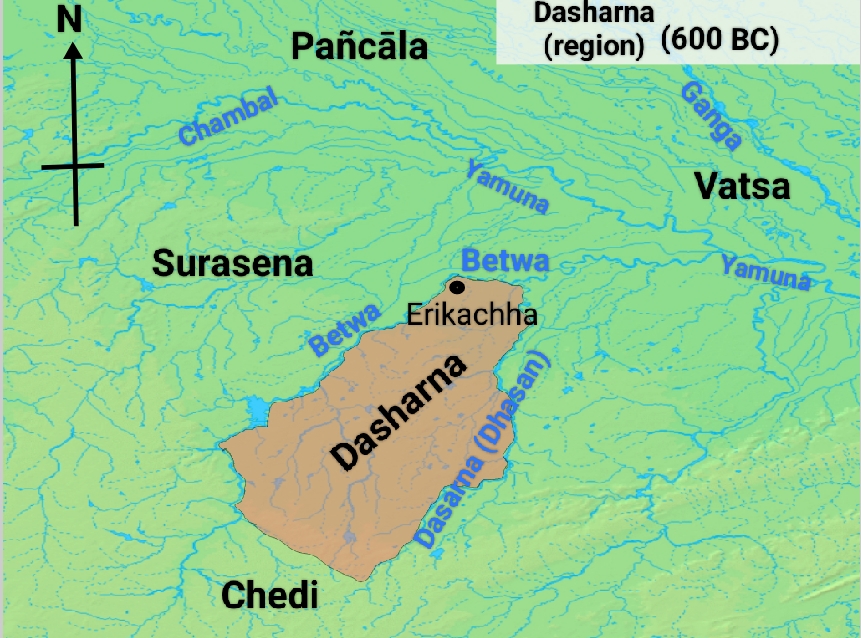
Historical regions, also known as historical areas, are geographical regions that at some point in recorded history held cultural, ethnic, linguistic, or political significance as distinct entities, irrespective of later borders and administrative divisions. They are used to study and analyze the social development of period-specific cultures without reference to contemporary political, economic, or social organizations.
- key_example
- Moravia (Czech Republic) as a historical land, distinct from contemporary administrative regions (kraje) such as South Moravian Region or Moravian-Silesian Region
Lore & Background
Historical regions are geographical areas that had cultural, ethnic, linguistic, or political significance as distinct entities at some point in recorded history, regardless of later borders and administrative divisions. For example, Moravia, held by the Czech Republic, is a historical land rather than a contemporary administrative region; the current divisions are regions (kraje) like the South Moravian Region or Moravian-Silesian Region. These regions are used for studying and analyzing the social development of period-specific cultures without reference to contemporary political, economic, or social organizations.
Reader's Guide
The concept of historical regions rests on the principle that older political and mental structures exercise greater influence on spatial-social identity than is often understood by the contemporary world, which is bound to and often blinded by its own worldview, such as the focus on the nation-state. Definitions of regions vary, encompassing macroregions like Europe, territories of traditional sovereign states, or smaller microregional areas. Geographic proximity is generally the required precondition for the emergence of a regional identity. In Europe, regional identities often derive from the Migration Period, but for the contemporary era they are also related to territorial transformations following World War I and the Cold War.
Did You Know?
- Historical regions are defined without reference to contemporary political, economic, or social organizations.
- Moravia is a historical land of the Czech Republic, not a contemporary administrative region; the current divisions are regions (kraje) such as South Moravian Region or Moravian-Silesian Region.
- Geographic proximity is generally the required precondition for the emergence of a regional identity.
Intellectual Origins and the Berkeley School
The idea of mapping human culture onto geography did not emerge fully formed. Its earliest traces can be found in the late nineteenth century, when museum curators and ethnologists began organizing their collections by regional groupings, blending exhibit layout with taxonomic thinking. Two American anthropologists, Clark Wissler and Alfred Kroeber, pushed this arrangement into a more rigorous framework, arguing that cultural areas reflected deep, long-standing divisions among human communities. Although scholars have occasionally labeled this approach arbitrary, the practice of sorting societies into cultural regions has endured across the social sciences. A parallel intellectual thread ran through the Berkeley School of cultural geography, where Carl O. Sauer and his colleagues treated culture as an active force shaping a natural landscape. Sauer's deterministic framing later drew criticism, prompting Yi-Fu Tuan and other geographers to weave in subjective, lived experience. That revision gave rise to what is now called humanistic geography, a shift scholars mark as the cultural turn in the discipline.
Taxonomies and Typologies of Cultural Space
Scholars have proposed several overlapping vocabularies for describing how culture radiates from a center. Carl Sauer coined the phrase cultural hearth, while Donald W. Meinig introduced cultural core in a 1970 study of Mormon culture. Fred Kniffen and later Henry Glassie preferred source area, a term Glassie applied to the spread of house and barn types. Beyond any core, Glassie borrowed Meinig's distinction between a domain, where a culture holds dominance, and a sphere, where its influence reaches but does not prevail. These spheres can overlap or nest into concentric rings of macrocultures wrapping smaller local traditions. Boundaries shift depending on which facet one examines, such as religion and folklore versus dress, or architecture versus language. A separate three-part typology distinguishes formal regions marked by cultural homogeneity across a contiguous area, functional regions united by shared political, social, or cultural roles, and perceptual or vernacular regions that exist because people collectively imagine a place as a spatial whole, as with India's Braj region and its deep religious associations.
Drawing Lines: Cultural Boundaries in Practice
A cultural boundary marks the geographic seam where two identifiable ethnic or ethnolinguistic groups meet. Because language is woven into the fabric of any society, a linguistic border automatically functions as a cultural one, yet it can also slice through a single ethnolinguistic community along subtler lines. In German-speaking Switzerland, the Brünig-Napf-Reuss line separates regional identities; in Germany, the so-called Weißwurstäquator draws a culinary-cultural divide; and the Grote rivieren boundary distinguishes Dutch from Flemish cultural life. On a continental scale, European history is shaped by two major fault lines. In the west, the legacy of the Roman Empire remained dominant in Latin Europe, while in Germanic Europe it blended with indigenous traditions. In the Balkans, the Jireček Line separates areas where Western Roman Latin influence prevailed from those where Eastern Roman Greek influence held sway. At the broadest level, macro-cultures spanning continents are sometimes called worlds, spheres, or civilizations, with the Islamic world serving as a classic example.
Contemporary Relevance and Specialized Applications
The culture-area framework is experiencing a renewed wave of practical and theoretical interest, driven largely by social scientists investigating the mechanisms of cultural globalization. In specialized contexts, the term cultural bloc has gained particular traction in Australian anthropology. Ronald Berndt is credited with coining the phrase in 1959 to describe the Western Desert cultural bloc, a cluster of Aboriginal peoples in central Australia whose languages encompass roughly forty dialects. Other recognized blocs include the Noongar of south-western Australia, the Bundjalung of northern New South Wales and southern Queensland, and the Kuninjku/Bininj Kunwok and Yolngu blocs in Arnhem Land. At a macro level, broad dichotomies such as the East-West divide between Western civilization and the Orient, or the socio-economic North-South split, continue to structure global discourse. The concept also maps neatly onto language-family regions, from the Celtic-speaking world and the Francophonie to the Sinosphere and the indigenous language groups of the Americas and the Pacific, offering a flexible lens for comparing human cultural diversity across every continent.
Gallery


Frequently Asked Questions
What exactly is a historical region?
A historical region is a stretch of land that, at some earlier point in recorded history, functioned as a distinct cultural, ethnic, linguistic, or political unit. It is studied for what it meant to the people who lived there, independent of any modern borders or government structures that may have since overwritten it.
Can you give a concrete example of a historical region?
Moravia in the Czech Republic is a classic case: it still exists as a recognized contemporary region, yet its identity was shaped centuries ago by older political and social structures that gave it a distinct spatial-cultural character separate from Bohemia or Silesia.
How is a historical region different from a modern country or state?
A modern state is defined by current legal borders, constitutions, and administrative divisions, whereas a historical region is anchored in past mental and political structures that shaped how communities understood their own identity. The two can overlap, but a historical region persists in collective memory even after the political entity that once defined it has dissolved or been redrawn.
What historical events most commonly gave rise to these regions?
The Migration Period in Europe is one of the most frequent sources, as large-scale population movements created durable cultural and linguistic zones. Territorial reshufflings after World War I and again after the Cold War also produced or redefined numerous historical regions whose boundaries no longer match any current government map.
More in Regions & Cultural Spheres 25-29
Elsewhere in the Regions & Cultural Spheres universe
Spotted an error? Know more?
This is a living reference — every entry is fact-audited, and reader corrections feed straight into our audit queue. Suggest an edit · See this site's audit record